

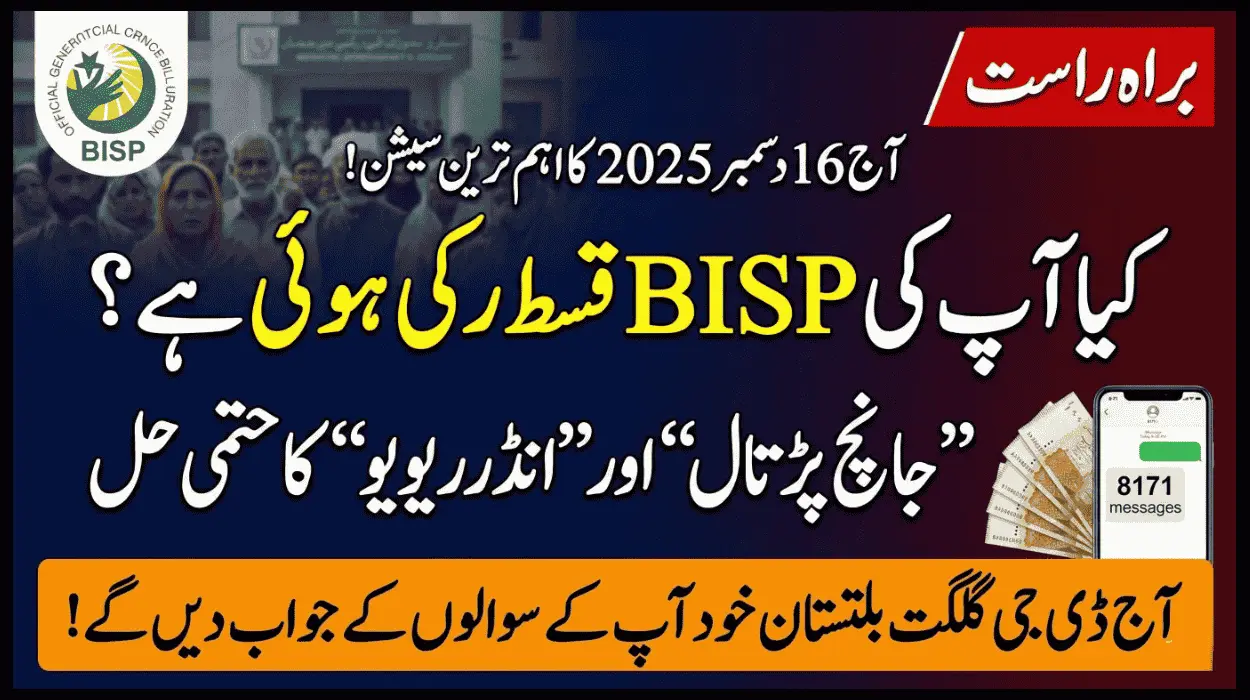
BISP Live E Kacheri Today 16 December 2025 DG Gilgit Baltistan Answers. BISP beneficiaries often feel stuck between messages, verification steps, and payment timelines. That is why a live e kacheri matters. Today, Tuesday 16 December 2025, BISP holds a live e kacheri session with the Director General Gilgit Baltistan to listen to public queries and guide people toward solutions that work in real life. If you are dealing with payment delays, under review status, or confusion about 8171 messages, this guide helps you prepare your questions, understand the most common issues, and leave the session with a clear next step.
What a Live E Kacheri Means for BISP Beneficiaries
A live e kacheri is a public focused session where people share problems and receive guidance in direct language. It gives beneficiaries a chance to describe real obstacles such as verification not completed, missing installments, biometric mismatch, or record updates. It also creates a path to clarity because it highlights the correct process and discourages shortcuts. For many families, the biggest value is reassurance that their case is solvable when they follow the proper method and keep records consistent.
Why Today Session With DG Gilgit Baltistan Matters
Today session matters because it connects policy and operations with the people who experience the process day to day. The Director General Gilgit Baltistan represents the administrative side that understands how cases move through verification and payment systems. When leadership listens directly, common problems become easier to spot and solutions become easier to explain. For beneficiaries, it is an opportunity to understand what steps are expected right now and what actions keep their BISP eligibility stable.
Who Should Attend and What to Expect
This live session helps anyone who receives BISP support or wants clarity on their status. It is especially useful for people who see messages like verification not completed or under review. It also helps families who do not understand why payments pause even though they believe they qualify. Expect the session to focus on practical issues, clear steps, and safer ways to report problems. The session can also guide you on how to avoid fraud and how to protect your personal data while seeking help.
How to Prepare Your Query Before You Join
Preparation makes your question sharper and your answer more useful. Many people ask broad questions like why my payment is not coming. A better approach is to state your status and the specific issue you see. Keep your wording simple, factual, and focused on one problem at a time. The clearer your question, the faster the guidance becomes.
Helpful preparation tips
- Write your issue in one sentence such as my status shows under review
- Keep your CNIC number available but do not share it publicly in open comments
- Note the last time you received a payment and what message you see now
- Identify whether your issue is verification, payment, or withdrawal related
- Prepare one follow up question in case the first answer needs clarification
This approach supports fast resolution and reduces confusion during the session.
Common Public Queries Raised in BISP Sessions
Most beneficiaries face similar pain points, which is why live sessions often repeat the same topics. Understanding these categories helps you match your case with the correct solution path and reduces panic.
Common query categories
- Verification not completed and record not active
- Under review status and payment paused
- Biometric mismatch at payment point
- CNIC expiry or name spelling mismatch
- Household information update and profile correction
- SIM and contact number issues affecting communication
- Deduction complaints and safe withdrawal guidance
These categories cover most issues that interrupt cash assistance continuity.
How to Explain Verification Not Completed in a Useful Way
If your message says verification not completed, treat it as an incomplete step rather than a final decision. Your record likely needs CNIC matching, biometric confirmation, or household detail confirmation. When you ask your question, explain what you already tried. For example, you can say you attempted biometric verification and it failed, or you updated household details and your status still does not change. Clear facts help the session guidance point you to the correct verification method.
What Under Review Status Usually Indicates
Under review commonly appears when the system needs confirmation of identity or household data. It can happen when details change or when information looks inconsistent. This does not automatically mean you are removed. It often means the system is checking your record for accuracy. The correct response is to update any missing details through proper channels and complete verification steps carefully. Staying calm protects your decision making and keeps you away from scammers who exploit urgency.
Payment Delay Complaints and How to Frame Them
If your payment is delayed, the best question includes the last payment month, your current status message, and whether your CNIC is valid. Avoid guessing and avoid adding multiple problems into one question. A strong example is I received my last installment earlier and now my status shows under review. What step completes my verification and restores my payment. This wording invites a direct answer linked to payment restoration.
How to Handle Biometric Mismatch During Withdrawal
Biometric mismatch is a frequent complaint because fingerprint capture can fail for older beneficiaries or people with worn fingerprints. The safest guidance usually includes retry steps such as cleaning and drying fingers, placing the finger correctly, and trying again calmly. If devices seem faulty, the right approach is to request another attempt rather than paying someone for a shortcut. A clean biometric match protects your payment security and keeps your identity safe.
Comparison of Verification Methods
Verification is not one single method. Different problems require different checks. This table helps you identify which route matches your situation so you can ask better questions and prepare the right documents.
| Verification method | Best use case |
|---|---|
| CNIC data matching | When identity details must align across records |
| Biometric verification | When fingerprint confirmation is required for payments |
| Household record update | When family details or address need correction |
| Contact number confirmation | When messages and alerts depend on a stable number |
| Manual review support | When complex mismatches need staff validation |
Knowing the method helps you avoid repeat visits and supports faster resolution.
How to Protect Your CNIC and Personal Data During Live Sessions
Live sessions are public by nature, so privacy matters. Do not post CNIC numbers, fingerprints, full addresses, or private phone details in open comments. Instead, describe your issue without exposing sensitive information. If the team needs specific details, the correct approach is to share them through a secure official process, not in a public chat. This keeps you safe from identity misuse and protects your beneficiary record.
BISP New Payment January 2026 Rs 13500 Start Date and Status Check Guide
How to Spot Scams Related to Live E Kacheri Discussions
Scammers often appear when people talk about payments and verification. They may send messages claiming they can activate your status or increase your payments for a fee. A simple rule keeps you safe: do not pay anyone to fix your status and do not share codes or CNIC photos with unknown people. Real processes do not require secret fees. The live session is also a reminder to follow only proper channels and avoid unofficial agents.
Recheck BISP 8171 Eligibility 2025 Updated Online Portal Status Guide
What Solutions Usually Work for Most Cases
Most problems improve when beneficiaries focus on consistency. Valid CNIC, correct spelling, accurate household information, and completed biometric verification solve many cases. Another powerful solution is patience with the correct process, because repeated attempts without correction do not change the result. If you hear a solution during the session, write it down and follow it step by step. That is how you convert information into action and restore BISP payments.
8171 Web Portal 2026 Update: Check Rs 13,500 Payment Status Instantly
A Simple Checklist to Use After the Session Ends
After the live session, it is easy to forget details. Use a checklist to keep your next steps clear and measurable.
Post session action checklist
- Write down the exact step advised for your case
- Gather documents needed for that step
- Complete the advised verification method carefully
- Keep your contact number active and reachable
- Save any confirmation messages you receive
- Avoid paying anyone or sharing private details
- Recheck your status after completing updates
This checklist turns guidance into results and supports a smoother path to status activation.
Apply Online for Prime Minister Youth Business and Agriculture Loan 2025
How This Session Builds Trust and Community Confidence
When beneficiaries see leaders answer questions in open forums, it reduces fear and rumor pressure. It also encourages people to follow official steps rather than shortcuts. In regions like Gilgit Baltistan, where access and travel can be challenging, clear guidance becomes even more valuable. A session like today builds confidence that the program is listening and that issues can be resolved through organized steps.
Punjab Green E Taxi Scheme 2026: Eligibility Check and Installment Plan Guide
Why Clear Communication Improves Payment Continuity
Many payment problems start as communication problems. People do not know what under review means, or they do not know why biometric verification fails. When a session explains these issues in simple words, families make better choices. They prepare documents, avoid scams, and reduce repeated visits. Clear communication strengthens beneficiary empowerment and helps payments reach the right people with less stress.
PM Laptop Scheme 2026 Phase 5: Step by Step Online Application Guide
Final Words
BISP Live E Kacheri today, Tuesday 16 December 2025, with the Director General Gilgit Baltistan is a practical chance to turn confusion into clarity. Prepare one focused question, protect your personal data, and follow the correct verification path based on your status. When you act with calm consistency, most issues like verification not completed, under review, and withdrawal problems become solvable and your BISP support stays stable.
FAQs
What should I ask in the BISP live e kacheri today?
Ask one clear question linked to your current status such as under review, verification not completed, or payment delay. Mention what you see and what you already tried so the answer becomes specific.
Can I share my CNIC number in the live session comments?
Avoid sharing CNIC numbers or private details in public comments. Describe your issue without exposing sensitive information and follow secure official channels if details are needed.
Why does my status show under review even though I received payments before?
Under review often means your record needs confirmation due to a mismatch or an update requirement. Completing the correct verification step usually helps your status return to active.
What should I do if biometric verification fails at withdrawal?
Clean and dry your fingers, try again calmly, and request another attempt if the device seems faulty. Do not pay anyone for shortcuts because it risks your record and security.
How do I use the session guidance after it ends?
Write down the advised steps, gather documents, complete verification carefully, and keep your contact number active. Save confirmations and avoid unofficial agents to stay safe and consistent.