

Benazir Kafalat Payment Starts 15 January 2026: Check Status and Collect Easily. When a new payment date is announced, people want one thing: clear, practical guidance. The Benazir Kafalat Program payment start from 15 January 2026 is a major update for families who rely on this support for groceries, medicine, school needs, and utility bills. But along with hope, there is also confusion. Many beneficiaries ask how to confirm eligibility, how to check CNIC status, where to collect payment, and what to do if their status shows under verification.
This guide explains everything in a simple and current way. You will learn what the 15 January 2026 payment start means, how the release usually works in phases, how to check your status, how to collect payment safely through biometric verification, and how to avoid deductions and scams. A helpful comparison table is included in the middle, followed by final words and FAQs.
What “Payment Start From 15 January 2026” Means for Beneficiaries
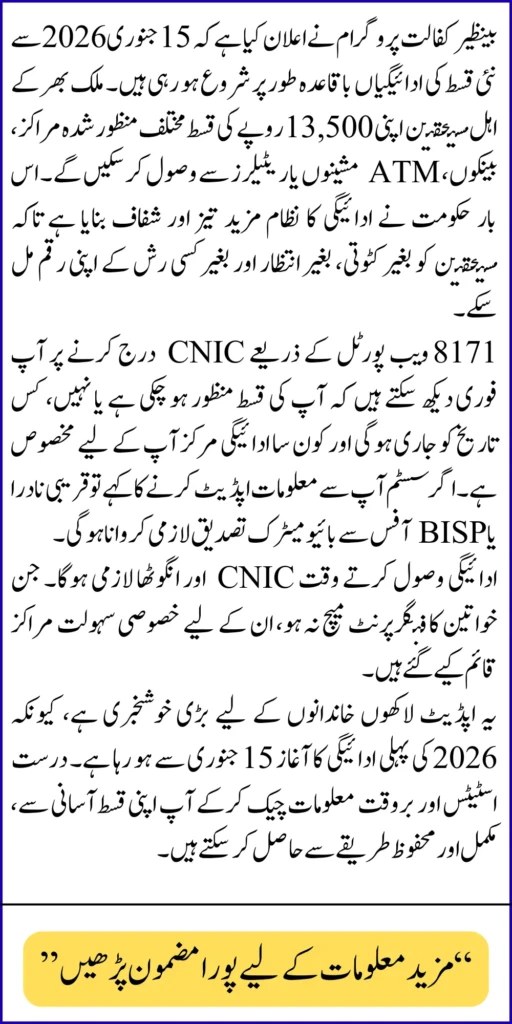
The phrase “payment starts from 15 January 2026” typically means the disbursement cycle begins on that date and then rolls out in phases. It does not always mean every beneficiary receives money on the first day. Some districts and payment points open earlier, while others follow a scheduled release plan.
In the current payment system, release timing depends on:
- verification status of your CNIC
- whether your profile shows eligible
- local payment point readiness and crowd control planning
- any reverification or data update requirements
So the best approach is to check your status first, then visit the payment point only when payment ready appears.
Who Receives Benazir Kafalat Payments in the Current Cycle
The Benazir Kafalat Program is designed to support low income households, with women often being the primary recipients. In the current system, the payment flow prioritizes verified and active beneficiaries to reduce fraud and ensure the money reaches the right families.
You are more likely to receive payment smoothly if:
- your CNIC is valid and not expired
- your profile shows eligible or payment ready
- your household record remains verified and active
- your biometric verification works properly at the payment point
- your record is not blocked or suspended due to missing updates
If you recently completed a survey update, your profile may show under verification for a short period before payment becomes available.
How to Check Benazir Kafalat Payment Status Before 15 January 2026
Checking status before you travel saves time and reduces stress. It also protects you from misinformation spread by agents or unofficial sources.
A simple status check routine:
- keep your 13 digit CNIC number ready
- use official 8171 CNIC based checking methods
- read your status message carefully
- if the message shows payment ready, plan your visit to the payment point
- if it shows under verification, wait for updates and keep documents ready
- if it shows blocked, prepare for correction through official support
The biggest mistake is visiting the payment point without confirming payment readiness.
Understanding the Most Common Status Messages
Status messages are short but meaningful. When you understand them, you make the right decision at the right time.
Common messages:
- Eligible means you qualify, and processing continues
- Payment ready means your money is available for withdrawal after biometric verification
- Under verification means your record is being reviewed or updated
- Under process means system updates are still running
- Blocked means mismatch or missing details must be corrected
- Not eligible means you do not meet criteria right now
- Payment collected means payment is marked as issued
If payment collected shows but you did not receive money, you should file a complaint immediately.
Where and How Payments Are Collected After 15 January 2026
Collection method usually depends on how the payment points are arranged in your area. The aim is to ensure secure delivery and prevent crowding.
In the current system, beneficiaries typically collect payments through:
- authorized cash disbursement points in their assigned area
- biometric verification based collection channels
- partner payment points that confirm identity through fingerprints
The most important rule is: only collect from authorized points and do not trust private agents claiming they can withdraw for you.
Step by Step: How to Collect Benazir Kafalat Payment Safely
Once your status shows payment ready, follow a safe and clear method so you receive your full payment without deductions.
Step by step collection method:
- take your original CNIC
- visit the authorized payment point in your area
- request your Benazir Kafalat payment for the current cycle
- complete biometric fingerprint verification yourself
- confirm the amount before accepting cash
- count your cash at the counter
- keep any receipt or confirmation message safe
If someone demands a fee, refuse it and report it through official complaint support.
Comparison of Verification Methods
| Verification Method | What It Confirms for the January 2026 Payment |
|---|---|
| 8171 SMS CNIC check | Basic eligibility and payment readiness update for your CNIC |
| Online portal status check | Detailed messages like under verification, eligible, or payment ready |
| Biometric fingerprint verification | Secure identity confirmation during cash withdrawal |
| Local support office verification | Correction for blocked records and complaint registration |
| Survey update and reverification | Household data updates that keep payments active and smooth |
Why Some People Face Delays Even After 15 January 2026
Delays can happen even after the payment start date. Most delays come from verification or system updates, not because your payment is permanently stopped.
Common delay reasons:
- CNIC expired or mismatch in identity data
- record under verification due to recent survey update
- biometric verification issues at payment points
- area scheduled in a later phase to manage crowd control
- missing child documents for households linked with education support
- blocked status due to incomplete data
Most issues become manageable when you identify the real reason and follow official correction steps.
BISP Survey 2026: New Eligibility Rules, PMT Score, and Payment Guide
How Women Can Avoid Deductions and Middlemen During Payment
Women are often targeted by middlemen who try to cut a portion of the payment. The best protection is awareness and a simple routine.
Safety tips:
- know your payment entitlement before you go
- keep your CNIC in your own hand at all times
- do not share your CNIC photo or verification codes with anyone
- never allow someone else to do biometric verification for you
- count cash at the counter and confirm the amount clearly
- report any deduction attempt immediately through official channels
Your money is meant for your household needs, and you deserve the full amount.
Ehsaas Program 25000 CNIC Check 2025: Eligibility, Confirmation, and Payment
What to Do If Biometric Fingerprint Verification Fails
Fingerprint issues are common and usually fixable. Do not panic and do not leave without trying the correct steps.
What often works:
- wash hands and dry completely
- avoid oil, lotion, or dust on fingers
- request the staff to clean the scanner
- place finger properly and hold steady
- try another finger if the system allows
If repeated failure happens, visit official support for biometric update guidance.
Punjab Ration Card 2026 Online Registration, CNIC Eligibility and Status Check
What to Do If Status Shows Payment Collected but You Receive Nothing
This issue should be treated seriously because the system shows payment issued.
Immediate steps:
- keep proof like SMS message or a screenshot of the status
- visit the nearest official support office with CNIC
- file a complaint and request investigation
- keep your complaint reference number for follow up
Quick action protects your current payment and future cycles.
Benazir Taleemi Wazaif Enrollment Reopens: New and Previously Ineligible Kids
Tips for a Smooth Collection Experience in January 2026
Small habits can save hours of waiting.
Helpful tips:
- check status early morning before traveling
- avoid peak crowd hours when possible
- keep CNIC safe and readable
- bring water and a companion if you are elderly or pregnant
- do not visit if your status is still under verification
- use official support if you face blocked or mismatch issues
Preparation improves comfort and reduces stress.
CM Punjab Ration Card 2025: Rs 3,000 Monthly Registration Guide
Final Words
The Benazir Kafalat Program payment start from 15 January 2026 brings important support for eligible families, especially women managing household expenses. In the current system, the key to receiving payment smoothly is simple: verify your CNIC status first, understand your portal messages, and collect only through authorized points using biometric verification. Avoid agents, refuse deductions, and report issues quickly if your payment shows collected without receipt. When you follow the right steps, your payment process stays safe, clear, and stress free.
FAQs
1) Does payment start from 15 January 2026 mean everyone gets paid on the same day?
No. The cycle starts on that date, but distribution usually rolls out in phases depending on area scheduling and verification status.
2) How can I check my Benazir Kafalat payment status?
Use official 8171 CNIC based checking methods and read whether your status shows eligible or payment ready.
3) What does payment ready mean?
Payment ready means your installment is available and you can withdraw it after biometric verification at the authorized point.
4) Why is my status under verification?
It means your record is being reviewed or updated, often after survey updates or system checks.
5) What documents do I need to collect payment?
You typically need your original CNIC and successful biometric fingerprint verification for withdrawal.
6) What if someone asks for a fee or cuts my payment?
Refuse, count your cash at the counter, and report the deduction attempt through official complaint support.
7) What if the portal shows payment collected but I did not receive money?
File a complaint immediately with your CNIC and any proof because it indicates a serious payment issue.