

Children grow fast, but their nutrition needs grow even faster. When families face rising food costs, illness, or limited access to health services, kids are often the first to feel it through weak immunity, low weight, and slow learning. That is why a collaboration between BISP and the Sindh Health Ministry matters so much. It brings social protection and public health support into one connected approach, so families can get guidance, screening, and practical nutrition help in a clearer, more coordinated way.
Why Child Nutrition Needs a Joined Up Approach
Child nutrition is not only about food. It is also about clean water, healthcare access, vaccinations, maternal health, hygiene, and timely support when a child starts showing warning signs. A program can give relief, but a health system can diagnose and prevent. When both work together, families get a smoother path from cash support to health improvement.
This kind of collaboration helps reduce gaps such as:
- Families receiving support but missing health checkups
- Children getting treatment but not getting consistent nutrition guidance at home
- Mothers needing counseling but not knowing where to go
- Communities lacking clear direction about stunting prevention and child growth monitoring
With coordination, families get better clarity and stronger follow through.
What the Collaboration Means for Families in Sindh
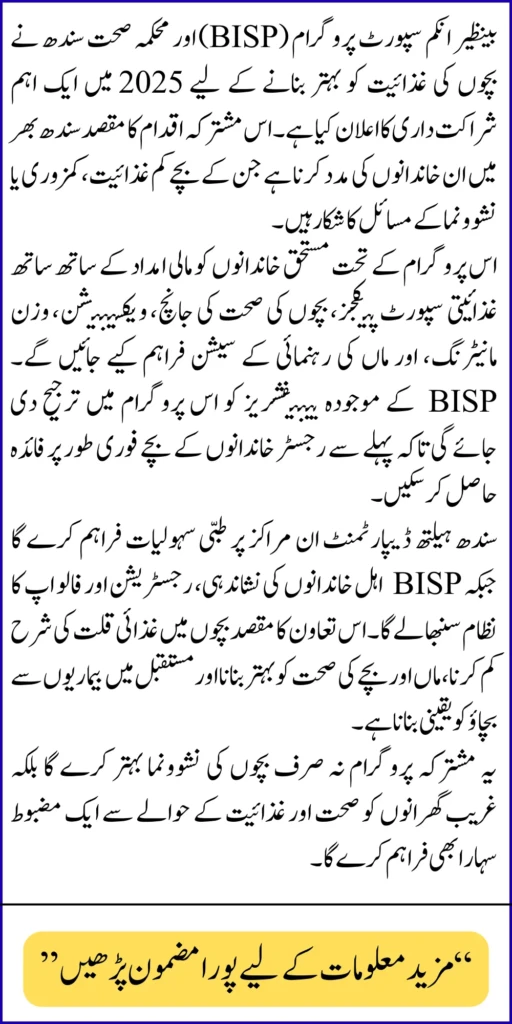
When a social support program and a health department coordinate, the biggest win is practical: families know what to do next. A household already connected to BISP beneficiaries can also receive easier access to child health touchpoints like screenings, awareness sessions, and referral pathways.
In a simple sense, this collaboration supports:
- Maternal and child health focus for vulnerable families
- Improved access to nutrition screening and counseling
- Better targeting for children at risk of wasting or stunting
- Faster referrals to nearby services when needed
- Stronger awareness about feeding, hygiene, and early care
Families do not just receive help. They receive a plan.
The Child Nutrition Challenges This Partnership Can Tackle
Many parents do everything they can, yet still struggle because the problem is bigger than one household. Common child nutrition challenges include:
- Low dietary diversity, meaning children eat the same limited foods daily
- Frequent illness, which lowers appetite and reduces nutrient absorption
- Poor feeding routines due to lack of guidance or misinformation
- Maternal anemia and low nutrition during pregnancy, which affects newborn health
- Limited access to checkups, especially in underserved areas
By aligning community health services with poverty alleviation support, this partnership can address root causes in a more realistic way.
How Nutrition Support Can Link With BISP Households
A strong nutrition strategy connects support to action. That means a family understands what the support is for, and what habits and health steps matter most for children.
Practical areas where the link becomes powerful include:
- Promoting exclusive breastfeeding for infants where appropriate
- Encouraging age appropriate complementary feeding after infancy
- Supporting mothers with counseling on meal planning using affordable local foods
- Encouraging regular growth checks for early detection of undernutrition
- Helping families recognize red flags such as sudden weight loss, repeated diarrhea, or persistent weakness
This is how nutrition education turns into everyday change.
What Families Can Do Right Now to Support Child Nutrition
Even before any additional service steps, parents can focus on reliable nutrition actions at home. These steps often cost less than people think, but they require consistency.
Here are high impact practices:
- Serve meals on a routine schedule so a child’s appetite stabilizes
- Add one extra nutritious item daily such as egg, lentils, yogurt, or seasonal fruit if available
- Offer clean water and encourage handwashing before meals
- Continue feeding during illness in smaller frequent portions
- Prioritize iron rich foods where possible and follow medical advice for supplements if prescribed
Small improvements, repeated daily, support healthy child growth more than occasional big changes.
How Health Services Can Strengthen Nutrition Outcomes
Healthcare becomes a nutrition tool when it is regular and preventive. A coordinated approach typically supports:
- Growth monitoring and early detection of risk
- Immunization awareness that reduces illness related weight loss
- Deworming guidance where medically advised
- Counseling on feeding and hygiene routines
- Referral support for children who need specialized attention
When families use health services consistently, child development improves and nutrition becomes easier to maintain.
Who Benefits Most From Child Nutrition Focused Support
This collaboration most strongly helps families where risks are higher. While every child needs good nutrition, certain households need extra support due to vulnerability.
Groups that benefit most include:
- Households with limited income and unstable food access
- Pregnant and breastfeeding mothers needing maternal nutrition guidance
- Infants and toddlers in rapid growth stages
- Families with children who frequently fall sick
- Households in remote or underserved areas
The goal is not only treating malnutrition. The goal is preventing it.
Common Barriers Families Face and How to Handle Them
Many barriers are practical, not personal. Families often want to follow guidance but face obstacles like time, travel, cost, and confusion.
Ways to handle common barriers:
- If travel is difficult, plan one fixed day monthly for child growth monitoring
- If food choices are limited, focus on improving one meal daily
- If misinformation spreads in the community, follow guidance from official health staff
- If records are confusing, keep one folder with CNIC copies and child documents
- If a child refuses food, try smaller meals more often and keep the environment calm
When parents feel supported, they stick to healthier routines longer.
Comparison of Verification Methods
When families want to confirm support, enrollment, or linked services, verification becomes important. The table below compares common verification approaches in a simple way.
| Verification Method | What It Helps You Confirm |
|---|---|
| CNIC based confirmation through official channels | Eligibility status and whether your household is active |
| SMS based status checking where available | Quick check using a basic phone when internet is limited |
| Visit to a service center or office for record updates | Corrections in household data and resolution of mismatches |
| Health facility registration and child record check | Child service linkage such as screening and follow up visits |
How to Stay Safe From Misinformation and False Promises
Whenever support programs become popular, misinformation increases. Families should protect themselves from fake agents and false claims.
Keep these safety rules:
- Never pay fees to anyone for “fast approval” or “guaranteed enrollment”
- Do not share CNIC photos in random groups or to unknown numbers
- Avoid unofficial links that ask for personal data
- Trust only official guidance from verified staff or recognized service points
- Keep your household record accurate so you do not need shortcuts
Real support systems do not need bribes, secret codes, or middlemen.
BISP New Payment System 2026: Receive Payments Locally Without Queues
How Communities Gain When Children Become Healthier
Child nutrition is not only a family issue. It is a community future issue. When children become healthier, schools see better attendance, clinics see fewer emergencies, and parents miss fewer workdays.
Community wide benefits include:
- Lower illness rates and better immunity
- Improved early learning and attention span
- Reduced healthcare costs for families
- Stronger outcomes for girls and boys in school
- Better long term productivity and wellbeing
A healthier child today becomes a stronger adult tomorrow. That is why public health collaboration matters.
BISP Balance Check by CNIC on 8171 Portal Easy Payment Status Guide
What Success Looks Like in a Child Nutrition Partnership
Success is not only a headline. It is visible in everyday life. A successful nutrition partnership looks like:
- Parents knowing what to feed and why it matters
- Children getting regular growth checks
- Mothers receiving respectful guidance and support
- Children gaining weight steadily and falling sick less often
- Families having a clear path to services without confusion
When systems work together, families feel the difference.
BISP 8171 Double Payment 2026: Verify Eligibility and Claim Rs 27,000 Safely
Final Words
The collaboration between BISP and the Sindh Health Ministry can strengthen child nutrition by combining social protection with health based guidance. Families benefit when support connects to real services like screening, counseling, and referrals. The most important step is staying informed, following healthy routines at home, and using official verification channels when needed. When parents, programs, and health services align, children get the strong start they deserve.
What is the best focus keyphrase for this article?
BISP Sindh Health Ministry child nutrition
How does BISP support connect with child nutrition improvements?
BISP support helps families manage basic needs, and when it links with nutrition counseling and child health services, parents can use support more effectively for healthier meals and regular checkups.
What should parents do if they worry their child is underweight?
Parents should seek a health check for growth monitoring, follow feeding guidance, and watch for warning signs like repeated illness, low appetite, or visible weight loss while focusing on healthy child growth routines.
Can child nutrition improve even with a low household budget?
Yes. Small consistent changes matter, such as adding affordable protein options when possible, improving meal timing, and protecting hygiene and clean water to support better nutrient absorption.
Why do health checkups matter for nutrition?
Checkups detect risks early and help prevent worsening malnutrition. Regular visits support child development through screening, advice, and referral when necessary.
How can families avoid scams related to support and health services?
Families should avoid paying agents, never share sensitive information publicly, and use only official verification methods for eligibility status and service linkage.
What signs suggest a child may need urgent attention?
Red flags include severe weakness, rapid weight loss, persistent diarrhea, repeated vomiting, or refusal to eat or drink. In such cases, families should seek immediate medical guidance for child safety.